The Benefits of Cone Beam 3-D Computed Tomography (CBCT) in Dentistry
In recent years, the field of dentistry has seen significant advancements in diagnostic imaging technologies, with Cone Beam Computed Tomography (CBCT) emerging as a transformative tool. This specialized form of X-ray provides three-dimensional (3D) images of dental structures, enhancing diagnostic capabilities and treatment planning. Here’s a closer look at the benefits of CBCT in dentistry in specific areas that affect your oral and overall health.
Superior Image Quality
CBCT offers superior imaging quality compared to traditional 2D X-rays. It provides detailed views of teeth, bones, and soft tissues, enabling dentists to detect issues that might not be visible with standard radiography. This improved diagnostic capability is particularly valuable for some of the following areas.
1. 3D Visualization
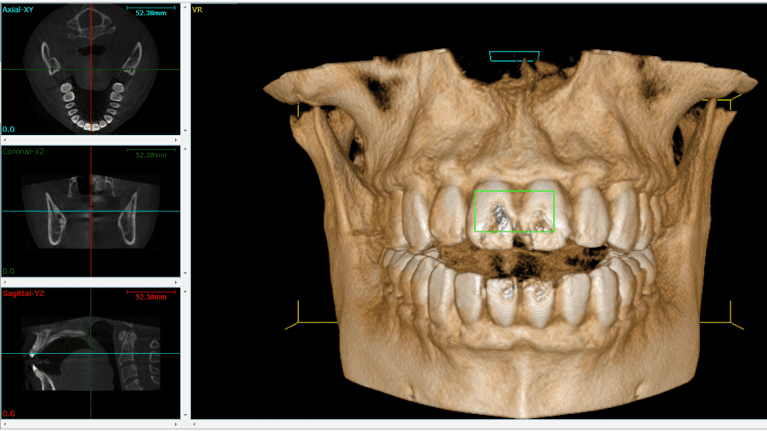
A key advantage of CBCT is its ability to create 3D images. This feature allows for a comprehensive understanding of dental anatomy and complex cases. With 3D reconstructions, dentists can:
- Analyze spatial relationships between teeth, surrounding structures, and the airway.
- Assess the extent of cavitations and other abnormalities.
- Educate patients using visual aids that enhance their understanding of their conditions.
2. More Accurate Diagnosis Including Soft Tissue Pathology
- The clarity and precision of CBCT images lead to more accurate diagnoses. Dentists can assess the spatial relationships between structures, which is vital for identifying conditions like tumors, cysts, and bone infections. The ability to visualize these details helps practitioners develop targeted treatment plans that cater specifically to the patient’s needs.
3. Improved Treatment Planning
The detailed information provided by CBCT scans enables more efficient and effective treatment planning. This is crucial for conditions like cavitations and airway issues, where precise intervention is necessary. Dr. Allen can:
- Develop individualized treatment plans based on accurate anatomical data.
- Simulate surgical procedures, reducing the risk of complications.
- Increase the predictability of outcomes for complex cases.
4. Reduced Radiation Exposure
- While any X-ray involves some level of radiation exposure, CBCT typically emits less radiation than conventional medical CT scans. Dentists can capture detailed images with a lower dose, prioritizing patient safety while obtaining the necessary diagnostic information. Advances in technology continue to lower exposure levels, making CBCT a safe choice for both routine assessments and specialized cases.
5. Airway Assessment
One of the significant benefits of CBCT is its ability to assess the airway, which is crucial for diagnosing sleep apnea and other respiratory issues. Dentists can evaluate:
- The size and shape of the airway.
- Potential obstructions or anomalies.
- The relationship between dental structures and airway space.
This information is invaluable for developing treatment plans that address both dental health and airway concerns, ensuring a holistic approach to patient care.
6. Cavitation Detection
A cavitation is a hole in the bone, usually where a tooth has been removed, and the bone has not healed/filled in properly. It is an area of osteonecrosis (dead bone). CBCT can reveal these hidden lesions, facilitating timely and effective intervention.
Inside a cavitation, anaerobic bacteria flourish and deviant cells multiply. Cavitations act as a breeding ground for bacteria and their toxins. Research has shown these bacterial waste products may be potent and result in digestion problems, chronic fatigue, general feeling of malaise, and other chronic health problems. Cavitations can also cause blockages on the body’s energy meridians and can exert far-reaching impact on the overall system. Cavitations may be a source of low level or high level stress on the entire body and may be addressed with removing these areas of potential infection.
7. Better Dental Implant Outcomes
- With the detailed data provided by CBCT, dental professionals can create surgical guides that facilitate precise implant placement. These guides can be used during the procedure to ensure that implants are positioned accurately, reducing surgery time and enhancing overall predictability. This technology empowers practitioners to perform guided implant surgeries with confidence.
This detailed information minimizes the risk of complications, such as nerve damage or sinus perforation, enhancing the likelihood of successful outcomes.
8. Versatile Applications
CBCT is versatile and applicable across various dental specialties, including:
- Orthodontics: Assessing tooth positioning and planning treatments.
- Endodontics: Detecting root canal issues with greater precision.
- Periodontics: Evaluating bone levels and planning for gum surgery.
- Oral Surgery: Diagnostics in aiding tooth extraction and implant replacement.